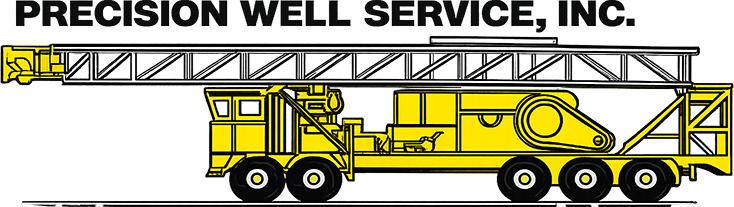
This guide to workover rig components addresses practical questions operators, contractors, and job seekers may have before making a field, equipment, or hiring decision. Workover rig components work together to raise, lower, support, and handle equipment during well servicing. Understanding the major systems helps an operator compare rigs and identify what additional equipment may be required for the procedure.
For operators, the important question is not simply whether a service is available, but whether the scope, equipment, people, and timing fit the condition of the well. Precision Well Service provides more information about its fleet specifications, and readers can also review the company’s well-service capabilities.
What to Know About Workover Rig Components
The derrick or mast provides the vertical structure and rated load capacity for the planned handling operation. The drawworks and drums control line movement, while the braking system helps manage loads during operation.
How the Equipment Fits the Complete Job
The engine and powertrain provide the energy needed to operate the rig systems under expected field conditions. Tubing and rod handling often requires trailers, racks, skates, elevators, slips, tongs, and other job-specific tools.
No piece of equipment works in isolation. The rig, pump system, handling tools, trucks, trailers, lines, tanks, and crew must be compatible with one another and with the approved procedure. A mismatch can create delays even when every individual unit is in good condition.
Selection and Planning Checklist
- Review mast and derrick ratings
- Confirm drawworks and braking configuration
- Match power and handling systems to the work
- List required tools and auxiliary units
- Verify inspections, maintenance, and safe operating limits
Operators can review Precision Well Service’s published fleet specifications and service capabilities before discussing a project. Those pages help identify the rigs and auxiliary equipment that may be relevant, but final selection should be based on complete job information.
Inspection, Maintenance, and Safe Use
Circulating units, power swivels, trucks, tanks, light plants, and loaders may be coordinated with the rig to complete the full scope. Equipment should be inspected before dispatch, during setup, and before use as required by the manufacturer, company procedures, regulations, and the operator’s program. Rated limits, guards, connections, lines, brakes, controls, and safety devices should never be treated as paperwork details.
Precision Well Service describes its approach to inspections, training, and hazard control on the safety page.
Related Well-Service Resources
Continue planning with these related articles:
- How to Select the Right Well-Service Rig
- Understanding Derrick Capacity on a Well-Service Rig
- Hydraulic Power Swivels in Well Servicing
Frequently Asked Questions
What information is needed to select equipment?
Provide the planned procedure, well configuration, expected loads, depth, pressure and fluid conditions, location dimensions, access limitations, and any operator-specific requirements. The service company can then discuss compatible rig and auxiliary-equipment options.
Can equipment be selected from capacity alone?
No. Capacity is important, but configuration, ratings throughout the system, site layout, mobility, connections, crew qualifications, maintenance status, and the complete procedure also affect suitability.
Why are pre-use inspections important?
Inspections help identify damage, leaks, missing guards, incorrect connections, worn components, documentation issues, and other defects before the equipment is exposed to operating loads or pressure.
Discuss Your Well-Service Project
Precision Well Service has served the Powder River Basin since 1978. To discuss a workover, cleanout, swabbing, circulating, trucking, equipment rental, completion-support, or other well-servicing need, use the contact page or call 307-682-5513.
Project requirements vary by well and operator. Final procedures, equipment selections, and safety controls should be established by qualified personnel using current site and well information.